
English| EUR
Suggested for you
More currencies
Choose a language
Most travellers searching for a Paris to Bruges train time guide want one number and find two timetables instead. This page explains why the Parijs–Brugge trein splits at Brussels, what governs each half of the run, and which hours Brugge station keeps at either end of the day. Every figure quoted here comes from the operator's own published information.
Quick answer
The Paris to Bruges train time hinges on the hours Brugge station keeps: 03:30–02:10 Monday to Friday, and 04:15–01:45 on Saturday and Sunday. Every journey changes at Brussels-Midi, so the Bruges train schedule depends on both the Eurostar leg and the Belgian InterCity leg. Aim to arrive between 09:00 and 17:00; entry to the station building is free.
No direct train links Paris with Bruges. Every itinerary involves a change, almost always at Brussels-Midi, where the Eurostar from Gare du Nord hands passengers over to Belgium's domestic network. That transfer is the reason any question about paris to bruges train time has two halves: the international leg, sold on fixed departures, and the Belgian leg, which runs on a repeating domestic timetable. Travellers who understand the split stop hunting for a single number and start reading two timetables instead. The trein van Parijs naar Brugge, as Flemish signage calls it, is a relay rather than a straight line. Brussels-Midi is the hinge. The station is signed in three languages — Bruxelles-Midi, Brussel-Zuid, Midi — which unsettles first-time visitors more than the transfer itself. Belgian InterCity services toward Ostend call at Brugge throughout the day, so a missed connection rarely costs a whole afternoon. Ostend-bound trains use the same line that carries Bruges commuters, which keeps frequencies steady outside the late-night hours. SNCB, the national operator, publishes the domestic legs on belgiantrain.be; the international leg is fixed the moment it is booked. The other half of the picture is the destination. Brugge station keeps a long daily span, opening before dawn and closing only in the small hours, and entry to the building costs nothing at all. Late returns are therefore a matter of timetable, not of locked doors. The practical consequence is that a day trip from Paris to Bruges by rail lives or dies on the first departure, not the last. An early Eurostar buys a full day in the medieval centre; a mid-morning one buys a hurried afternoon. The recommended arrival window of 09:00–17:00 exists for comfort as much as light, since commuter flows through Brussels thicken either side of it. The Belgian leg is short enough that most delays absorb themselves before the coast. Once in Brugge, the walk from Stationsplein into the centre is straightforward, with the Belfry visible as a bearing for most of it. Canal boats, the Markt and the Groeningemuseum all sit within the same compact quarter. Readers comparing options should treat paris to bruges train time as a planning frame rather than a fixed figure, then confirm exact departures against the operator's published timetable before booking.
“No direct train links Paris with Bruges; every journey is a relay through Brussels-Midi.”
This plan suits day-trippers travelling from Paris to Bruges by rail, with no overnight stay and a single connection each way. Door to door the outbound leg runs roughly 2h30 to 3h, and the full day from Paris departure to Paris return spans about 14 hours.
Board the Eurostar or Thalys service toward Brussels; the leg to Brussels-Midi takes about 1h25. Allow 30 minutes at Paris-Nord for platform access and security checks.
Change from the international platform to a Belgian domestic InterCity service. Connections are typically 20 to 40 minutes apart, and the walk between platforms takes under 10 minutes.
The InterCity to Bruges runs about 1h and departs roughly twice an hour. Trains stop at Ghent-Sint-Pieters en route, so check the destination board reads Brugge or Blankenberge/Knokke.
Total elapsed travel time is around 3h. The historic centre sits about 20 minutes on foot north of the station, or a short bus ride from the forecourt.
Walk the Markt, Burg square and the Belfry, then follow the Dijver canal toward the Begijnhof. Five to six hours covers the core sights at a relaxed pace without doubling back.
Walk back allowing 25 minutes, then take an InterCity to Brussels-Midi. Return departures run into the evening, though the last direct connection to Paris leaves Brussels well before midnight.
Board the high-speed service back to Paris-Nord for the final 1h25. Arriving at Brussels-Midi 20 minutes early gives room if the domestic leg runs late.
The best arrival window for your journey is 09:00–17:00. Scheduling your travel outside of peak commuter hours ensures a more relaxed arrival at the station.
—
Arriving mid-morning avoids the primary rush of local commuters. This timing provides a quieter experience as you transition from Paris.
Mild, 12°C to 20°C
These months offer balanced weather conditions. Mid-week travel remains recommended to manage pedestrian congestion.
Warm, 15°C to 23°C
Expect significant crowds during these summer months. Early arrival within the 09:00–17:00 window helps mitigate peak transit density.
Verdict: Tuesday to Thursday, arriving between 09:00 and 17:00 during the months of May or September.
The station building in Bruges remains accessible daily to accommodate travelers arriving from Paris. Operating hours vary slightly between weekdays and weekends.
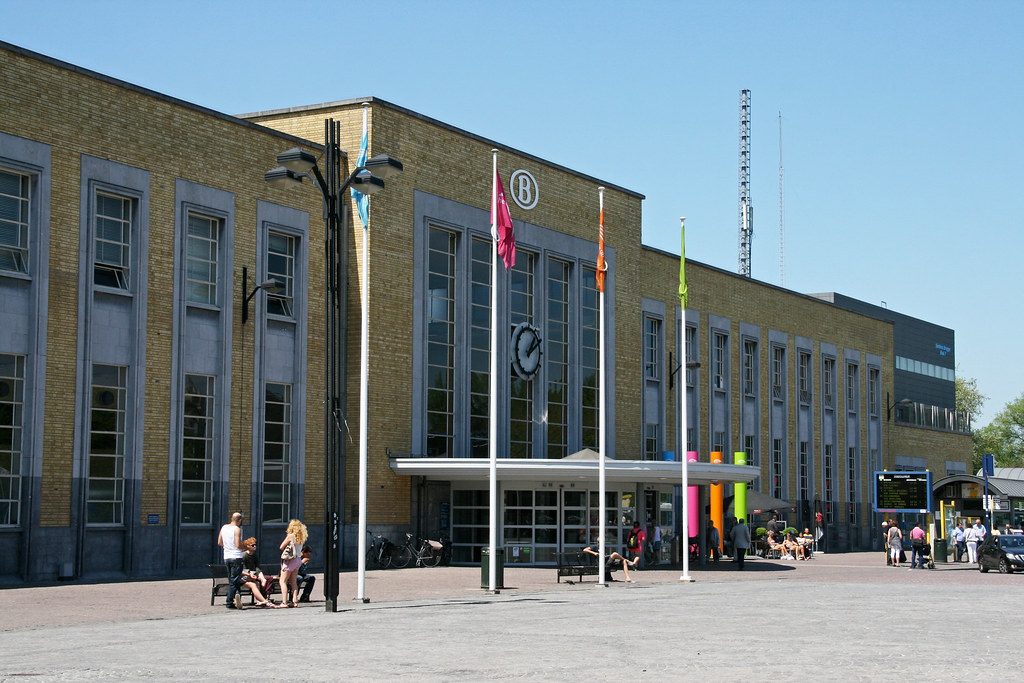
Upon completing your journey from Paris, you will arrive at Bruges Station (Brugge), located at Stationsplein 5, 8000 Brugge, Belgium. This central hub serves as the primary gateway to the city, offering seamless connections to the historic center.
Thalys or TGV to Brussels Midi, then SNCB/NMBS local train to Brugge
De Lijn city bus lines 1, 3, 6, 11, or 16 from station to city center
Walk from Brugge station through the station square toward the city center
Local taxi stand located directly outside the main station exit
For the most efficient transit, utilize the De Lijn bus terminal directly outside the station entrance for quick access to the Market Square. The station layout is straightforward, with clear signage directing passengers from the platforms toward the main station square.
Work through these steps in order, from the weeks before departure down to the morning you travel.
Everything you need to know about paris to bruges train time
The journey between these two cities usually involves a transfer, often in Brussels, making the total duration vary based on your connection. Planning ahead helps you manage your schedule effectively as you coordinate your departure from France and arrival in Belgium.
Travel schedules can fluctuate depending on the day of the week and specific rail operator timetables. It is recommended to check the official carrier website to view the most accurate departure and arrival options for your travel date.
Most itineraries require a change of trains at Brussels-Midi station. While you may search for a specific paris to bruges train time, ensure your connection window provides enough buffer for a smooth transition between platforms.
The station building is open Monday through Friday from 03:30 to 02:10, and on Saturday and Sunday from 04:15 to 01:45. These hours cover the vast majority of international and regional arrivals.
There is no cost to enter the station building as it is a public transport hub with 0 EUR entrance fee. You are free to move through the concourse to access ticket offices or platforms.
To enjoy a more relaxed experience, aim to arrive between 09:00 and 17:00. This avoids the busiest peak commuter periods, allowing you to navigate the station facilities with greater ease.
While booking in advance is standard for long-distance European rail, the train schedules are managed by the national operator. Review their official site to confirm your specific journey details and travel requirements.