English| EUR
Suggested for you
More currencies
Choose a language
Between Gare du Nord in Paris and Bruges Station in Belgium lie a border, a change of train and a good deal of misinformation. This how to get from Paris to Bruges guide sets out what the journey actually involves, and what it does not. There is no gate at the far end, and no ticket barrier around the old town.
Quick answer
Travel by rail from Gare du Nord, Paris, France to Bruges Station, Bruges, Belgium, changing at Brussels onto a Belgian domestic service heading west. The route is transport rather than a gated attraction, so it carries no entrance fee: 0 EUR. Seats on the high-speed leg are reservation-bound, and an arrival window of 08:00–10:00 leaves the fullest day in the city.
Bruges lies closer to Paris than Bordeaux does, yet no single high-speed line has ever joined the two cities end to end. That gap explains why how to get from Paris to Bruges remains one of the most searched logistics questions in northern Europe. The distance is modest. The arrangement is not. Two countries, two rail networks and one border crossing sit between Gare du Nord, Paris, France and Bruges Station, Bruges, Belgium. Travellers used to a single seat from origin to destination often assume a direct service exists, then find the route is assembled from two legs rather than one. The first runs north out of Paris on the high-speed corridor toward Brussels. The second is a Belgian domestic service running west across Flanders. Neither leg is complicated on its own. The join between them is where planning effort belongs, and where most of the confusion begins. Context makes the arrangement easier to accept. Brussels functions as the hinge of the whole network. High-speed lines from Paris, London, Amsterdam and Cologne converge at Bruxelles-Midi, and Belgian domestic trains fan out from the same concourse toward Ghent, Ostend and the North Sea coast. Bruges sits on that westward axis, a short run beyond Ghent-Sint-Pieters on the Ostend line. Belgian regional services operate at a steady frequency rather than to a scarce timetable, so a missed connection tends to be an inconvenience rather than a lost day. The Parijs–Brugge corridor is not exclusively a rail story either. Coaches and cars follow the motorway north through Lille and the old Flemish cloth towns, and every approach eventually meets the ring road that traces the line of the vanished medieval walls. Arrival at Bruges Station places a visitor south of the historic core, within walking distance of Minnewater, the Begijnhof and the Belfry that rises over the Markt. None of this is gated. The UNESCO-listed centre has no ticket barrier, no turnstile and no admission desk, which changes the shape of the planning problem considerably. The practical consequence is that the corridor charges nothing to use as a corridor: entrance is 0 EUR, because travel between the two cities is a transport route and not a gated attraction. Time, not admission, is the currency that matters. A Paris to Bruges day trip holds together because the Belgian leg is short and westbound departures are frequent, though it favours travellers who fix the northbound leg first and treat the Brussels change as the anchor of the itinerary. Reservations on the high-speed leg are compulsory and seats sell down earliest on summer weekends and Belgian public holidays, when the Flanders coast fills with domestic traffic of its own. That pattern holds through August and eases from mid-September. Anyone weighing how to get from Paris to Bruges should therefore begin with the departure hour, then let the rest of the day arrange itself around it. Platform detail, walking routes into the centre and what to pack are handled elsewhere on this site, section by section. Live timetables and disruption notices are published at https://www.sncf-connect.com.
“The distance is modest; the arrangement is not — two countries, two rail networks and one border sit between Gare du Nord and Bruges Station.”
Traveling from Paris to Bruges requires a journey by train from Gare du Nord, Paris, France to Bruges Station, Bruges, Belgium. The most efficient approach involves taking a high-speed train to Brussels, followed by a transfer to a local Belgian train to complete the route.
Eurostar from Paris Gare du Nord to Brussels-Midi
SNCB/NMBS local train from Brussels-Midi to Bruges Station
For the best experience, plan your journey within the best arrival window of 08:00–10:00. Arriving during this period helps you avoid peak midday crowds and provides more time to explore the city.
The best arrival window for your journey from Paris to Bruges is between 08:00 and 10:00. Arriving during this period allows you to reach the city before peak midday crowds arrive, providing more time to navigate the historic center.
—
Early trains minimize congestion during your transfer and arrival.
Mild with temperatures 12°C to 20°C
These months offer balanced weather for walking between Bruges Station and the city center.
Warm with temperatures 15°C to 23°C
Expect increased foot traffic and popularity during July and August.
Verdict: The best slot for travel is weekday mornings between 08:00 and 10:00 during the months of April, May, September, or October.
This procedure walks you through the physical journey from Gare du Nord in Paris to Bruges Station, including the change of trains in Brussels. Allow roughly half a day each way, and note that the route itself carries no entrance fee — 0 EUR, since travel between Paris and Bruges is a transport route, not a gated attraction.
Enter the station at Gare du Nord, Paris, France and find the Eurostar terminal, which sits on its own upper concourse rather than with the domestic platforms. Most people lose time hunting for it at ground level, so follow the dedicated signage as soon as you walk in.
Pass through ticket scanning, security and passport control before boarding; this is an international departure, so bring the passport or ID you travelled on. The gates close well before the train leaves, and once shut they are not reopened.
Find your carriage number on the platform indicator boards and take your assigned seat. Keep your bag near you rather than at the far end of the coach, because the Brussels stop is short and you need to be at the door quickly.
Step off at Brussels-Midi/Zuid and walk to the Belgian domestic platforms inside the same station — no separate transfer or second security check is needed. The main error here is exiting the building; stay inside the concourse and read the departure boards for services heading north.
Take the onward train towards Bruges, Ostend or Knokke/Blankenberge, all of which call at Bruges. Seats are unreserved on these services, so simply sit anywhere and keep your ticket accessible for inspection.
Watch for the announcement and platform signs reading Brugge, the Dutch spelling used locally. Travellers listening only for "Bruges" sometimes stay seated and continue to the coast.
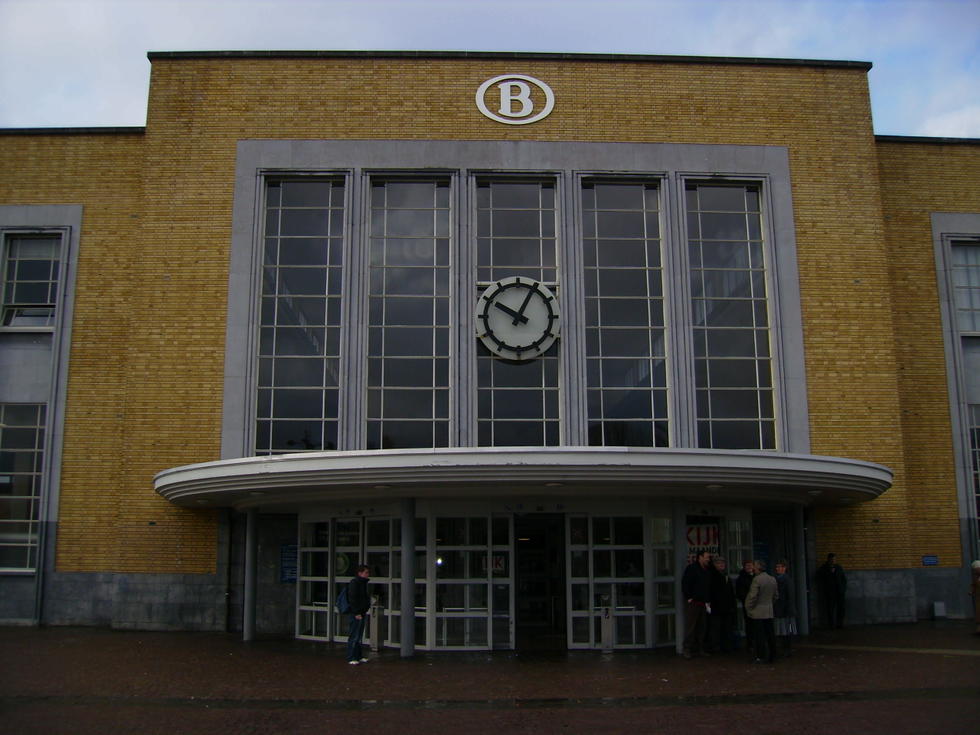
Leave Bruges Station, Bruges, Belgium through the main hall and head northeast on foot; the medieval core is a walk of about twenty minutes. Aim to be on the ground within the 08:00–10:00 window, since earlier trains avoid peak midday crowds and allow more time to explore the city.
Verify your route and any live service information at https://www.sncf-connect.com before you set out. Access to the stations themselves is unrestricted, with public areas open monday to sunday, 00:00–23:59.
A few preparations in the weeks before departure make the Paris–Bruges journey far smoother on the day.
Everything you need to know about how to get from paris to bruges
To travel by rail, passengers depart from Gare du Nord and connect through the Belgian rail network to reach Bruges Station. You can find route details and schedules on the official sncf-connect website.
The best arrival window is between 08:00 and 10:00 to avoid midday crowds. Arriving early provides more time to explore the city landmarks and local culture.
There is 0 EUR entrance fee for the transport route itself as it is a public transit journey between two cities. You will only need to account for your personal travel ticket costs.
Planning your journey via the primary rail corridor is the most effective way to manage your transit time. Checking the official site ensures you have the most current information for your trip.
The transport network operates continuously with service hours from 00:00 to 23:59 daily. This ensures travelers can coordinate their itinerary according to their personal schedule.
Traveling by train is a convenient option for families as it provides ample space compared to other modes of transport. Ensure you check station facilities for luggage and stroller accessibility.
The journey begins at Gare du Nord in Paris and concludes at Bruges Station in Belgium. These stations serve as the primary hubs for cross-border rail connections.
Using the official rail operator platforms is the most reliable way to secure your travel arrangements. Planning ahead helps streamline your experience while navigating these historic European destinations.